
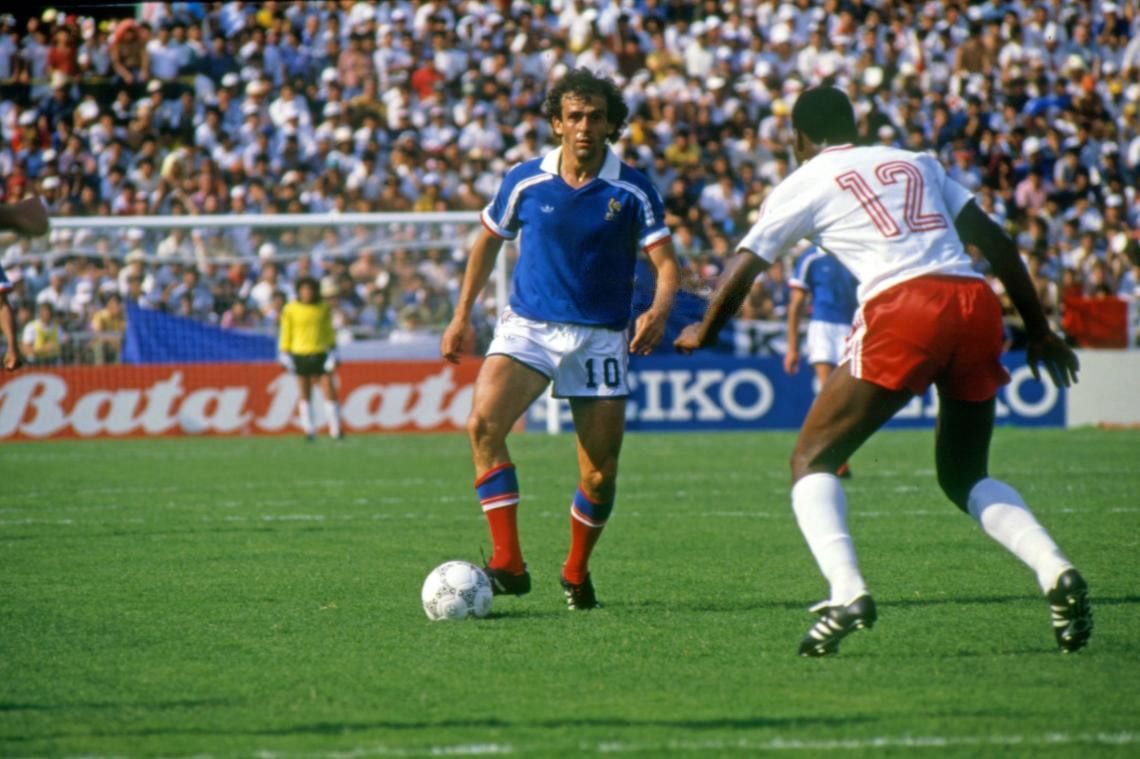
Michel Platini: Le Roi of the 1980s
Three Ballons d'Or in a row, nine goals at Euro 84 and the free kicks that defined an era at Juventus: the career of Michel Platini, France's captain and its king.
Michel Platini was a playmaker who finished like a striker. He played in the hole behind the forwards, saw passes that others did not and struck free kicks over the wall from twenty metres. He turned that into three Ballons d'Or in a row, a European Championship won at home and a place among the names the 1980s are remembered by.
France called him Le Roi, the king, and in the years when he led the national team he was as good a reason as any to believe the title.
The numbers
| Team | Period | League games | League goals | All-competition goals |
|---|---|---|---|---|
| Nancy | 1972–1979 | 181 | 98 | 127 |
| Saint-Étienne | 1979–1982 | 104 | 58 | 82 |
| Juventus | 1982–1987 | 147 | 68 | 104 |
| France (caps and goals) | 1976–1987 | 72 | 41 | 41 |
- 72/73: 2 goals
- 73/74: 2 goals
- 74/75: 30 goals
- 75/76: 28 goals
- 76/77: 25 goals
- 77/78: 25 goals
- 78/79: 15 goals
- 79/80: 26 goals
- 80/81: 29 goals
- 81/82: 27 goals
- 82/83: 28 goals
- 83/84: 25 goals
- 84/85: 29 goals
- 85/86: 17 goals
- 86/87: 5 goals
The curve is the shape of a scoring midfielder, not of a forward. It jumps from two cameo seasons to a sustained plateau at Nancy, through Saint-Étienne and into Italy, with little variation in the peak years. It only breaks at the end, in his last two seasons at Juventus, when the numbers fall away before he retires.
Nancy and Saint-Étienne
Platini made his league debut for Nancy against Nîmes on 3 May 1973. The club won promotion from the second division in 1974–75, and in 1978 he captained it to victory in the Coupe de France, scoring the only goal in the final against Nice. The French president, Valéry Giscard d'Estaing, presented the trophy.
His contract expired in June 1979, and although Inter Milan and Paris Saint-Germain were interested, he chose Saint-Étienne, signing a three-year deal. He won the league there in 1980–81, and the team beat PSV 6–0 in the UEFA Cup and won 5–0 at Hamburg in a later European tie. But he lost two Coupe de France finals, to Bastia in 1981 and to Paris Saint-Germain in 1982, the second one his last match for the club before moving to Juventus.
Juventus: Italy's best, then Europe's
At Juventus, Platini was the top scorer in Serie A in each of his first three seasons, an extraordinary return for a midfielder, and he won the Ballon d'Or in 1983, 1984 and 1985. He lost the 1983 European Cup final to Hamburg, but Juventus won the Cup Winners' Cup the next year, beating Porto 2–1 with Platini setting up the opening goal for Beniamino Vignola. Serie A titles followed in 1983–84 and 1985–86.
The European Cup came in 1985, in the worst circumstances. The final against Liverpool, on 29 May at the Heysel Stadium in Brussels, was played after a disaster before kick-off in which 39 people died and 600 were injured, under heavy police presence. Juventus won 1–0 through a Platini penalty, awarded for a foul on Zbigniew Boniek, in a night overshadowed by what had happened.
Later that year, Juventus won the Intercontinental Cup against Argentinos Juniors. Platini scored a penalty in normal time, set up Michael Laudrup's equaliser and scored the winning penalty in the shoot-out. He retired from all football in June 1987, a few weeks after his last match for France.
France: the Euro of 1984
| Tournament | Result | What it left |
|---|---|---|
| World Cup 1982 | Semi-finalists | Lost to West Germany in Seville on penalties after a 3–3 draw |
| European Championship 1984 | Winners | Nine goals in five matches; Player of the Tournament and top scorer |
| World Cup 1986 | Third place | Beat Brazil on penalties in the quarter-finals; beaten by West Germany in the semi-final |
Seville, 1982
France reached the semi-finals of the 1982 World Cup unexpectedly and met West Germany in Seville. Platini scored France's opening goal from the penalty spot, and the match was level at 3–3 after extra time. West Germany won the shoot-out 5–4. It is remembered above all for a collision between the German goalkeeper Harald Schumacher and the French defender Patrick Battiston, who was knocked unconscious. The referee did not give a penalty.
Euro 84 at home
Two years later, Platini captained France at a European Championship at home and produced one of the great individual tournaments. He scored two hat-tricks in the group stage, against Belgium and Yugoslavia, as France won all three matches. In the semi-final in Marseille he scored the winning goal for a 3–2 win in the last minute of extra time against Portugal.
The final was at the Parc des Princes against Spain. Platini opened the scoring with a free kick that Spain's goalkeeper, Luis Arconada, let slip, and Bruno Bellone added a second late in the match for a 2–0 win.
"The European footballer of the 1980s."
— Pelé on Platini, as quoted on Wikipedia
Mexico, 1986
He arrived at the 1986 World Cup playing with groin pain and under injection, not at his best. In the quarter-final against Brazil, on his 31st birthday, he scored the equaliser that took the game to a penalty shoot-out, and then sent his own penalty over the bar. France won the shoot-out 4–3 anyway. In the semi-final they lost to West Germany, for the second World Cup in a row, and France finished third.
His last match for France was a European Championship qualifier against Iceland on 29 April 1987. He finished with 49 matches as captain, and 41 goals, a French record until Thierry Henry passed it in 2007.
The trophies
Platini won the league in France and in Italy, the European Cup, a European Cup Winners' Cup, an Intercontinental Cup and the European Championship with France. Everything, in one table:
| Team | Honour | Years |
|---|---|---|
| Nancy | Coupe de France | 1977–78 |
| Nancy | Division 2 | 1974–75 |
| Saint-Étienne | Division 1 | 1980–81 |
| Juventus | Serie A | 1983–84, 1985–86 |
| Juventus | Coppa Italia | 1982–83 |
| Juventus | European Cup | 1984–85 (runners-up 1982–83) |
| Juventus | European Cup Winners' Cup | 1983–84 |
| Juventus | European Super Cup | 1984 |
| Juventus | Intercontinental Cup | 1985 |
| France | European Championship | 1984 |
| France | Finalissima | 1985 |
| France | World Cup | Third place 1986 |
| Individual | Ballon d'Or | 1983, 1984, 1985 |
| Individual | Serie A top scorer | 1982–83, 1983–84, 1984–85 |
| Individual | European Cup top scorer | 1984–85 |
| Individual | World Soccer Player of the Year | 1984, 1985 |
| Individual | Euro 84 Player of the Tournament and top scorer | 1984 |
Records
| Record | Detail |
|---|---|
| Ballon d'Or | Three in a row, 1983 to 1985 |
| France's top scorer | 41 goals until Thierry Henry passed him in 2007 |
| France captain | 49 of his 72 caps |
| Discipline | Never sent off in his career |
| Euro 84 | Nine goals in five matches, with two hat-tricks |
Le Roi
Platini operated as an offensive midfielder and playmaker, quick, elegant and intelligent in a way that did not rely on physical power. He is remembered for his free kicks, struck from around twenty metres over the wall, a technique that influenced specialists such as Alessandro Del Piero and Andrea Pirlo.
"Michel was one of those great players who saw fitness work as being a bit superficial."
— Giovanni Trapattoni, his coach at Juventus, as quoted on Wikipedia
After the pitch
Platini became France's national team coach on 1 November 1988. His team won all eight of its qualifying matches for Euro 1992, but went out in the first round of the tournament, and he stepped down.
He was elected president of UEFA in Düsseldorf on 26 January 2007, defeating Lennart Johansson by 27 votes to 23. On 8 October 2015 he was provisionally suspended by FIFA's ethics committee over a payment from Sepp Blatter, and in December he was banned from football until 2023, a sanction later reduced to four years. In July 2022 a Swiss court acquitted him of fraud, forgery, mismanagement and misappropriation of FIFA money, a verdict that was confirmed on appeal in March 2025.
Picks for you
Advertising. Affiliate links — we may earn a commission on your purchases, at no extra cost to you. It does not influence our editorial coverage.
Keep reading
 Legends
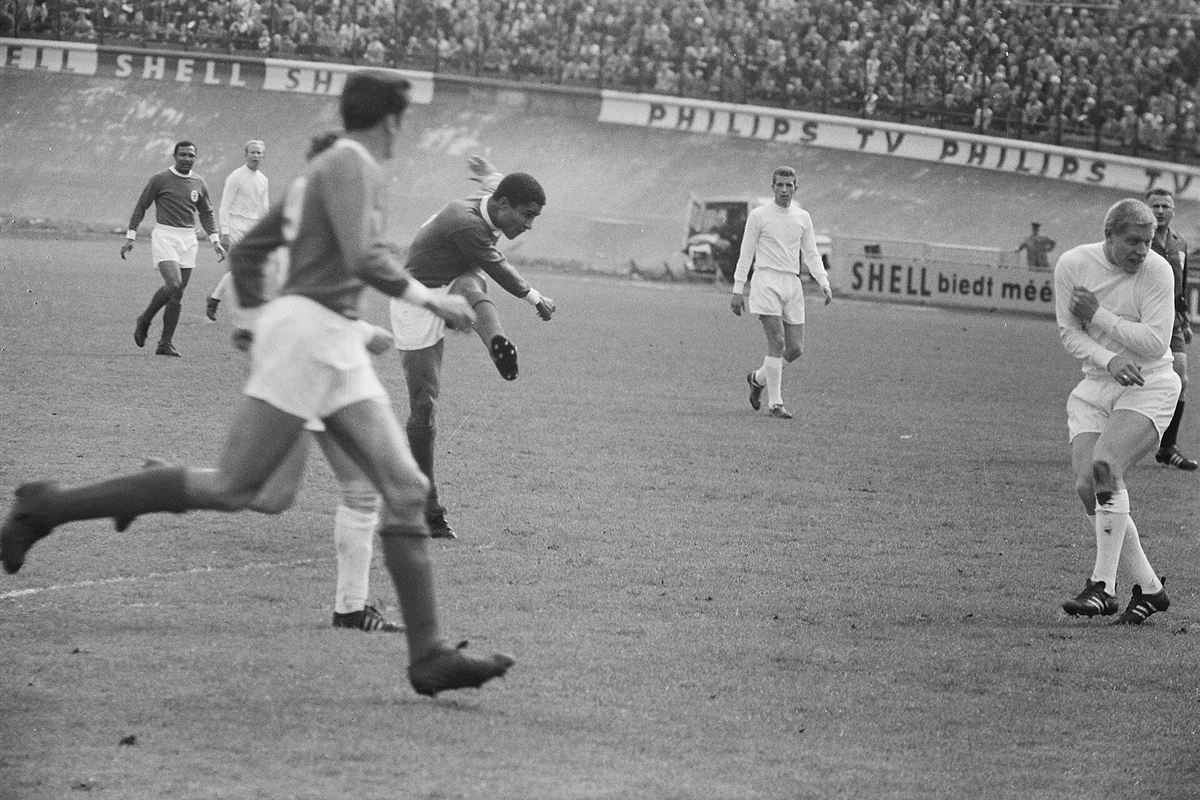
Eusébio: the Black Panther who carried Benfica and Portugal
A European Cup, a Ballon d'Or, nine goals at the 1966 World Cup and 473 goals for Benfica: the career of Eusébio, the first footballer buried in Portugal's National Pantheon.
 Legends
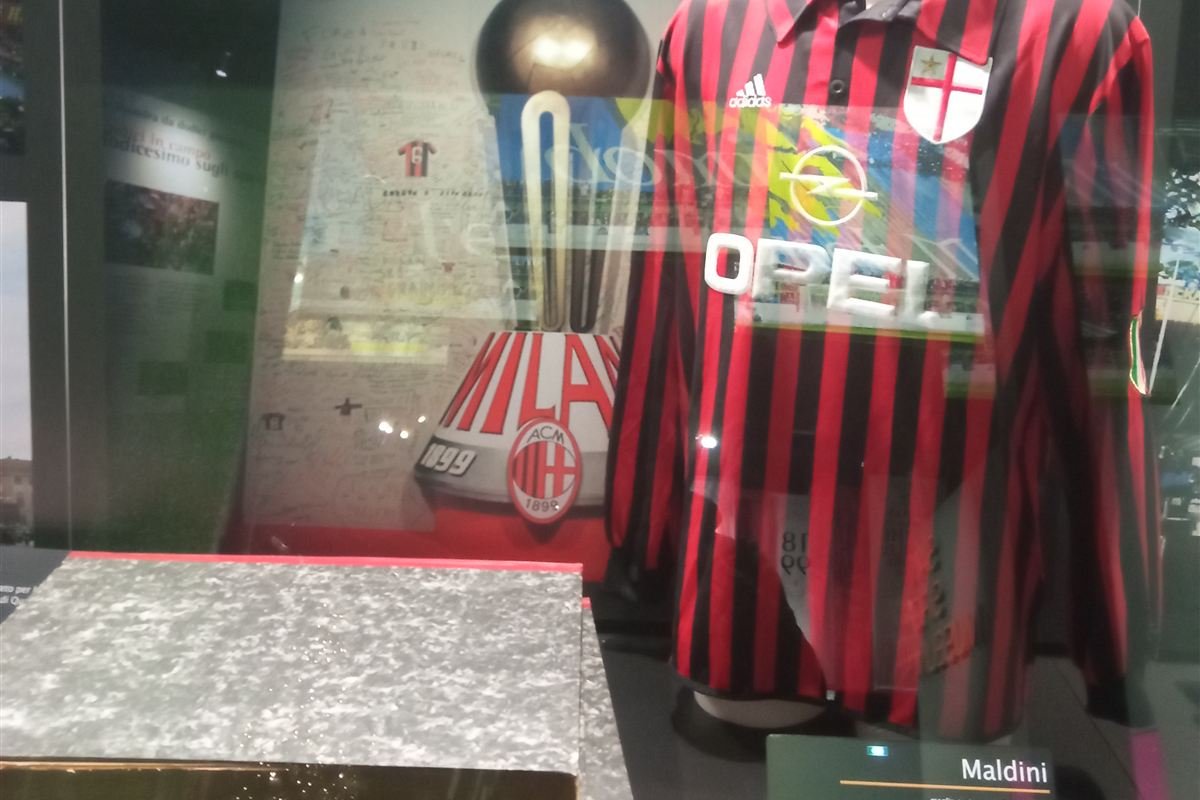
Paolo Maldini: the defender who never left Milan
Seven league titles, five European Cups, eight finals and a World Cup runner-up medal: the career of the one-club captain who played for Milan for a quarter of a century.
 Legends
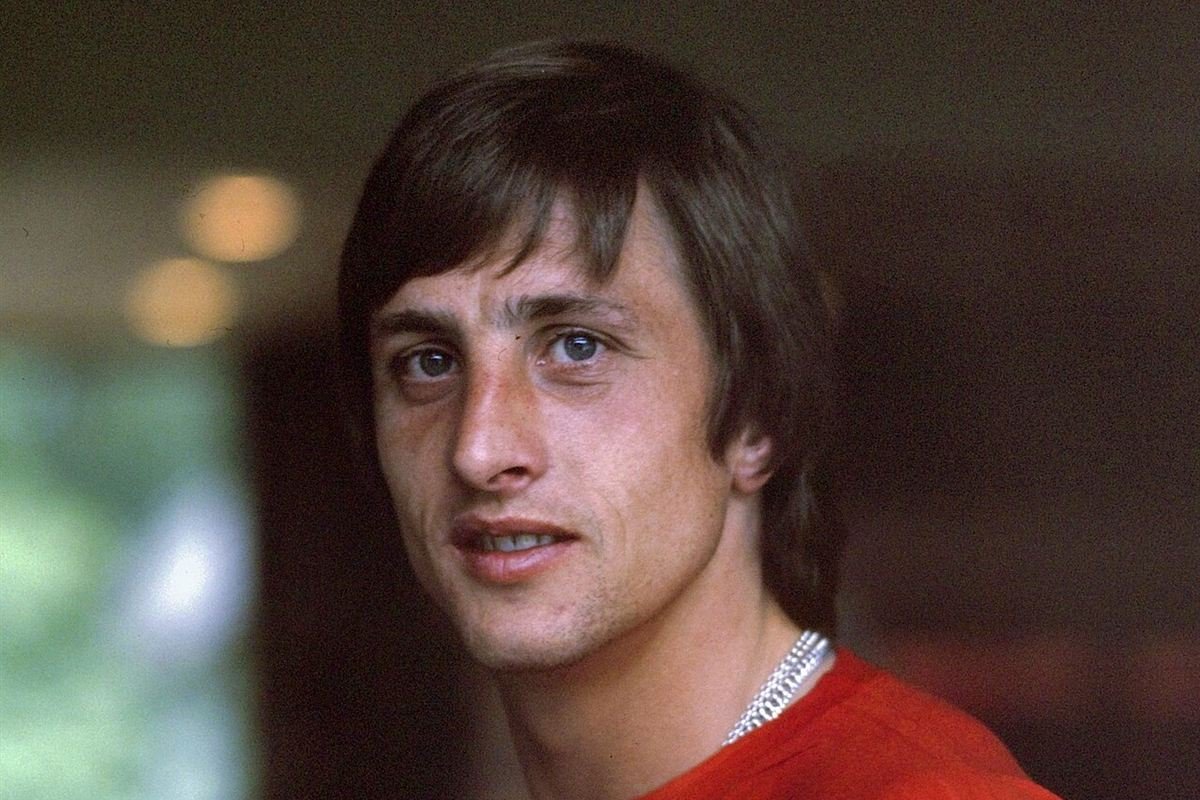
Johan Cruyff: the player who became a school of thought
Three Ballons d'Or, three European Cups with Ajax, the 1974 World Cup final and a second life as the coach who built Barcelona's Dream Team: the career of Johan Cruyff.