
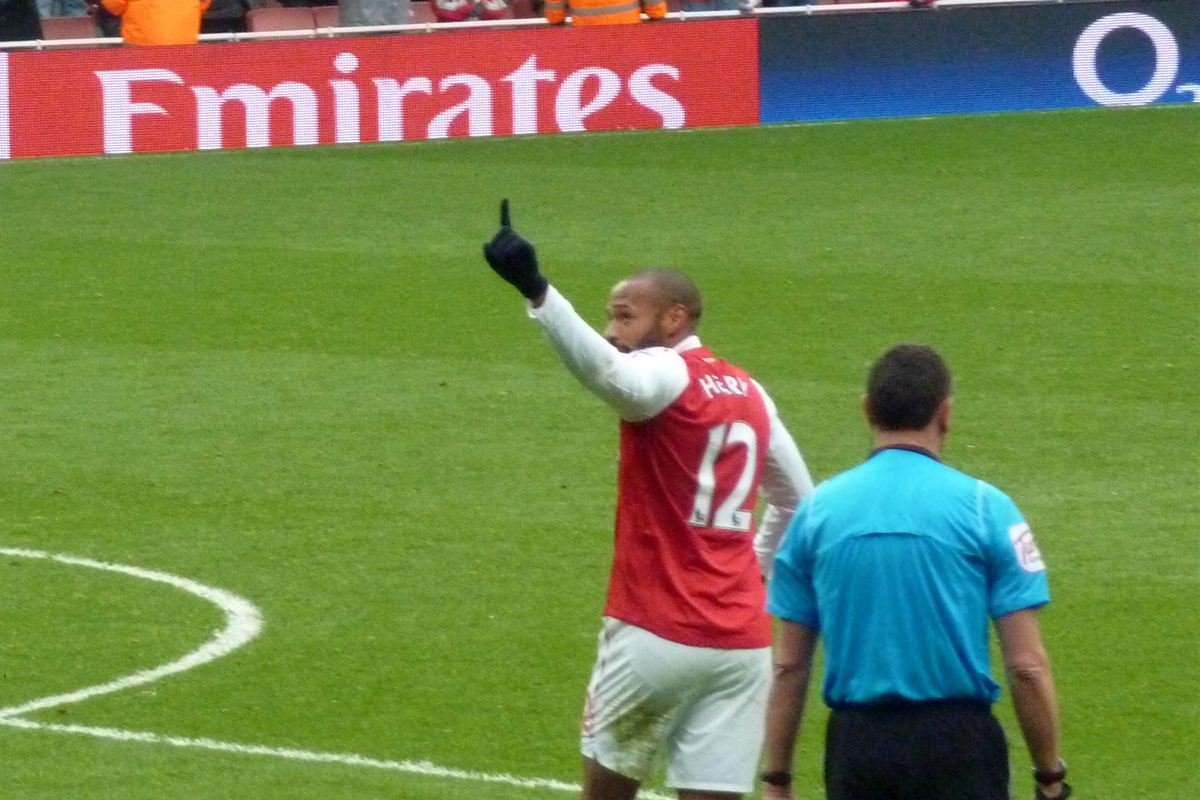
Thierry Henry: Arsenal's record scorer and a World Cup winner
228 goals for Arsenal, two Premier League titles including the unbeaten 2003–04 season, a Champions League with Barcelona and France's 1998 World Cup: the career of Thierry Henry.
Thierry Henry was a winger who became a striker. He arrived at Arsenal in 1999 after a difficult spell at Juventus, was moulded into a centre-forward by Arsène Wenger and left eight years later as the club's top scorer of all time. A statue of him stands outside the stadium.
He won the World Cup with France in 1998 and the European Championship in 2000, played in a Champions League final for Arsenal and won one with Barcelona, and finished his career in the United States.
The numbers
| Team | Period | League games | League goals | All-competition goals |
|---|---|---|---|---|
| Monaco (including the B team) | 1994–1999 | 124 | 26 | 34 |
| Juventus | 1999 | 16 | 3 | 3 |
| Arsenal | 1999–2007, 2012 | 258 | 175 | 228 |
| Barcelona | 2007–2010 | 80 | 35 | 49 |
| New York Red Bulls | 2010–2014 | 122 | 51 | 52 |
| France (caps and goals) | 1997–2010 | — | — | 123 caps, 51 goals |
- 94/95: 9 goals
- 95/96: 3 goals
- 96/97: 10 goals
- 97/98: 11 goals
- 98/99: 4 goals
- 99/00: 26 goals
- 00/01: 22 goals
- 01/02: 32 goals
- 02/03: 32 goals
- 03/04: 39 goals
- 04/05: 30 goals
- 05/06: 33 goals
- 06/07: 12 goals
- 07/08: 19 goals
- 08/09: 26 goals
- 09/10: 4 goals
- 2010: 2 goals
- 2011: 15 goals
- 2012: 17 goals
- 2013: 10 goals
- 2014: 10 goals
Two plateaus define him. The first is Arsenal, with 22 goals or more in every full season from 1999–2000 to 2005–06 and a peak in 2003–04. The second is his first two seasons at Barcelona, where he scored 19 and 26 from the left wing.
Monaco and Juventus
A Monaco scout, Arnold Catalano, watched Henry at 13 in 1990 when he scored all six goals in a 6–0 win. After a course at the Clairefontaine academy he joined Arsène Wenger's Monaco as a youth player and made his professional debut on 31 August 1994, a 2–0 loss to Nice. Wenger played him on the left wing, convinced that his pace and skill would work better against full-backs.
He was French Young Footballer of the Year in 1996 and helped Monaco win Ligue 1 in 1996–97. In 1997–98 he scored seven goals in the Champions League, a French record at the time, as Monaco reached the semi-finals. In January 1999 he left for Juventus for £10.5 million, where he played on the wing, as a wing-back and in wide midfield and scored three goals in 16 Serie A games.
Arsenal
Henry returned to Wenger on 3 August 1999, for an estimated £11 million, as the replacement for Nicolas Anelka. He failed to score in his first eight games and later said he had to be re-taught everything about the art of striking. He ended his first season with 26 goals.
In 2001–02 Arsenal won the Premier League and beat Chelsea 2–0 in the FA Cup final, with Henry the league's top scorer. Two seasons later they went the whole Premier League season unbeaten, the Invincibles, and he scored 30 league goals, his best total. After Patrick Vieira left for Juventus in the 2005 close season, Henry was made captain.
17 October 2005
Against Sparta Prague in the Champions League he scored twice and passed Ian Wright's record of 185 goals for the club. It made him the club's all-time top scorer.
The 2006 final
Arsenal reached the Champions League final that season and lost it 2–1 to Barcelona on 17 May 2006. Henry provided the assist from a free kick for Arsenal's only goal. A year later he left, with a season cut short by injury. Wenger said afterwards that he had wanted him to stay.
"You cannot take away from people what they have done and what he has delivered will stay forever."
— Arsène Wenger on Henry, January 2012, as reported by The National
The trophies
| Team | Honour | Years |
|---|---|---|
| Monaco | Ligue 1 | 1996–97 |
| Arsenal | Premier League | 2001–02, 2003–04 |
| Arsenal | FA Cup | 2001–02, 2002–03 |
| Arsenal | Community Shield | 2002, 2004 |
| Arsenal | UEFA Champions League | Runners-up 2005–06 |
| Barcelona | La Liga | 2008–09, 2009–10 |
| Barcelona | UEFA Champions League | 2008–09 |
| Barcelona | Copa del Rey and Supercopa de España | 2008–09; 2009 |
| Barcelona | UEFA Super Cup and FIFA Club World Cup | 2009 |
| New York Red Bulls | Supporters' Shield | 2013 |
| France | World Cup | Winners 1998, runners-up 2006 |
| France | European Championship | 2000 |
| France | Confederations Cup | 2003 |
| Individual | Premier League Golden Boot | 2001–02, 2003–04, 2004–05, 2005–06 |
| Individual | Ballon d'Or | Runner-up 2003, third 2006 |
| Individual | European Golden Shoe | 2003–04, 2004–05 |
| Individual | FWA Footballer of the Year | 2002–03, 2003–04, 2005–06 |
| Individual | PFA Players' Player of the Year | 2002–03, 2003–04 |
| Individual | French Player of the Year | 2000, 2003, 2004, 2005, 2006 |
Barcelona
Henry moved to Barcelona on 25 June 2007 for €24 million on a four-year deal. He scored 19 goals and made nine league assists in 2007–08, the club's top scorer that season, mostly on the wing.
In 2008–09 he scored 26 goals and made 10 assists from the left wing. He won the Copa del Rey on 13 May 2009 against Athletic Bilbao, and Barcelona then won La Liga and the Champions League, completing a treble. Together with Lionel Messi and Samuel Eto'o he scored 100 goals that season, 72 of them in La Liga, a Spanish record at the time.
The emergence of Pedro meant that he started only 15 league games in 2009–10. After the 2010 World Cup, Barcelona agreed to sell him.
New York, and a return to London
He signed for the New York Red Bulls in July 2010 as the club's second designated player. On 31 March 2012 he scored his first MLS hat-trick, in a 5–2 win over Montreal. On 27 October 2013 he scored once and made two assists in a 5–2 win over the Chicago Fire that made the Red Bulls regular-season champions, the club's first major trophy in its 17-year history. On 12 July 2014 he became the club's all-time assist leader, with 37.
In January 2012 he rejoined Arsenal on a two-month loan. On 9 January he scored the only goal of the FA Cup third-round win over Leeds United, and in his last league game he scored a stoppage-time winner in a 2–1 win over Sunderland. He announced his retirement as a player on 16 December 2014, two weeks after leaving the Red Bulls.
France
Henry made his France debut on 11 October 1997, a 2–1 win over South Africa. At the 1998 World Cup he finished as France's top scorer with three goals. He was due to come on in the final, but a sending-off for Marcel Desailly led to a defensive change instead, and France beat Brazil 3–0.
At Euro 2000 he scored three goals, again France's top scorer, including the equaliser against Portugal in the semi-final, and France beat Italy in extra time in the final. The 2002 World Cup was a failure, with no goals in three group games and a red card for Henry against Uruguay for a dangerous sliding challenge, which cost him the last group game. In 2003 France won the Confederations Cup, and he scored the golden goal in the final against Cameroon and took the Golden Ball and Golden Shoe.
Germany 2006
He scored three goals, including the quarter-final winner against Brazil from a Zidane free kick. France lost the final to Italy on penalties, 5–3, and Henry did not take a kick, having been substituted in extra time with cramp.
18 November 2009
In extra time of the second leg of the World Cup play-off against the Republic of Ireland, with the aggregate tied at 1–1, Henry handled the ball twice before crossing for William Gallas, who scored the winner. It drew heavy criticism. The Irish football association asked for a replay, and FIFA refused, saying it had no legal basis to sanction him.
He did not start at the 2010 World Cup. France drew with Uruguay, lost to Mexico and went out after a defeat by South Africa. He retired from international football afterwards.
Records
| Record | Detail |
|---|---|
| Arsenal, all competitions | Top scorer of all time |
| Arsenal, European goals | 42, 35 of them in the Champions League |
| Premier League goals in a season | 30 in 2003–04, shared with Robin van Persie |
| Premier League Golden Boots | Four, and three in a row |
| Premier League 2002–03 | Only player to score and assist 20 or more in a season |
| Premier League, goals at Highbury | 114, the most at a single ground |
| France, at his retirement | Top scorer of all time, and second most capped after Lilian Thuram |
| France, Platini's record | Equalled on 13 October 2007 against the Faroe Islands and broken four days later against Lithuania |
After playing
He moved into coaching at Arsenal's youth teams, then worked as an assistant with Belgium, as manager of Monaco and the Montreal Impact, and with France's under-21 and Olympic sides. Arsenal unveiled a statue of him outside the Emirates Stadium in December 2011.
Why he is remembered
He arrived with three goals in half a season at Juventus behind him and left as Arsenal's record scorer, with two league titles and one of the great individual records of the Premier League. The statue outside the stadium is the club's own verdict.
Picks for you
Advertising. Affiliate links — we may earn a commission on your purchases, at no extra cost to you. It does not influence our editorial coverage.
Keep reading
 Legends
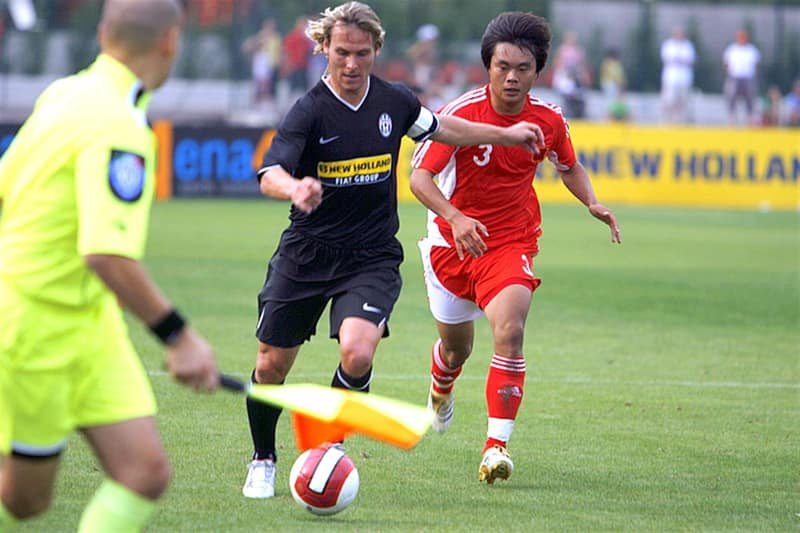
Pavel Nedvěd: the Czech midfielder who won the 2003 Ballon d'Or
Sparta Prague, Lazio and eight years at Juventus, including Serie B: the career of Pavel Nedvěd, the 2003 Ballon d'Or winner who missed the Champions League final through suspension.
 Legends
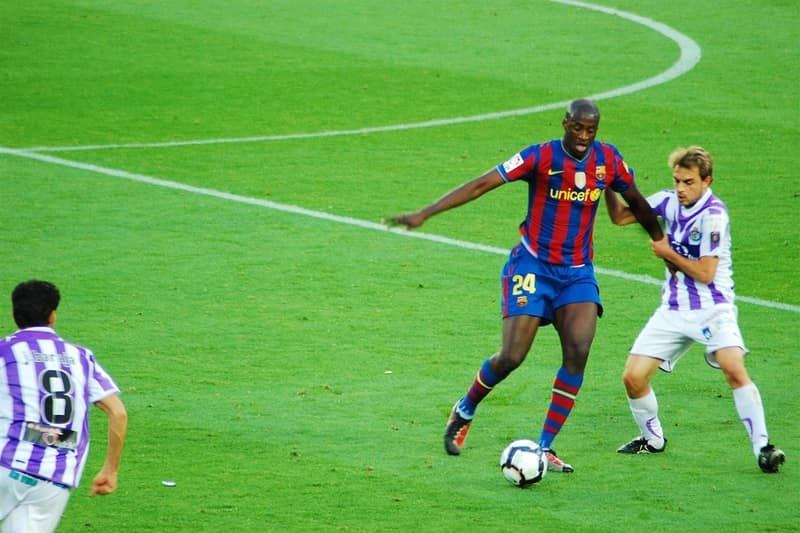
Yaya Touré: the midfielder who ended Manchester City's wait
The 2009 Champions League at Barcelona, the goal that won City the 2011 FA Cup, three Premier League titles and the 2015 Africa Cup of Nations: the career of Yaya Touré.
 Legends
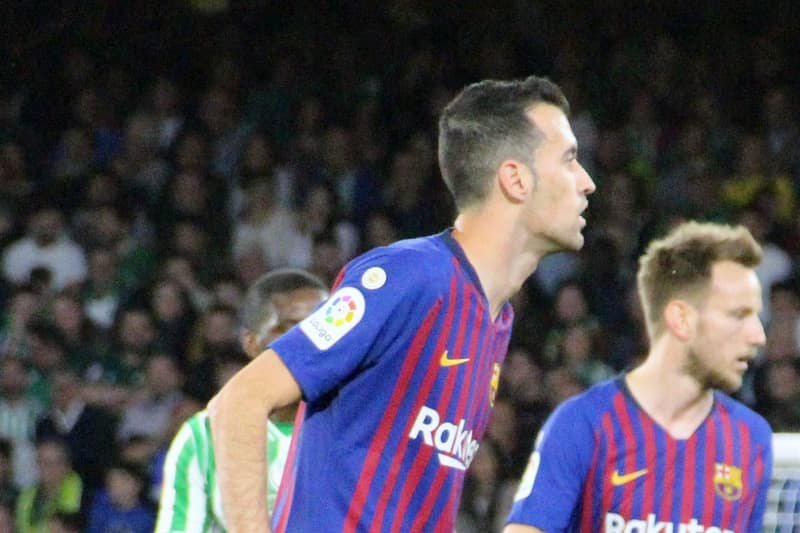
Sergio Busquets: the midfielder who anchored Barcelona and Spain
Nine La Liga titles, three Champions Leagues, the 2010 World Cup and the 2012 Euros, then Inter Miami and a final MLS Cup: the career of Sergio Busquets.