
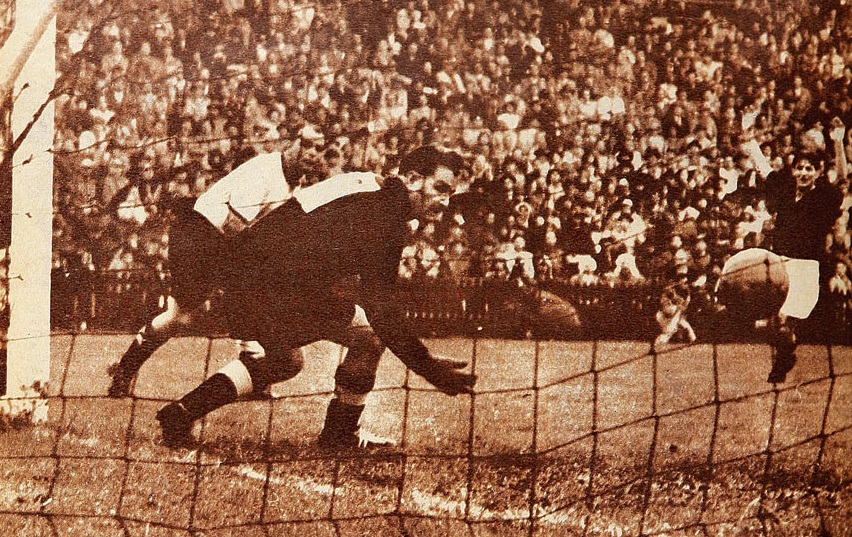
The Miracle of Bern: Germany 3–2 Hungary in 1954
Puskás's Hungary had not lost in four years and had thrashed Germany 8–3 earlier in the same World Cup. Then, in the rain, came the greatest upset in the history of the tournament.
4 July 1954, in the rain in Bern. On one side, Hungary and Ferenc Puskás — the most feared side on the planet. On the other, a West Germany that nobody took seriously: a country still rebuilding after the war, only back at the World Cup after being banned in 1950.
Hungary had not lost in four years — 31 unbeaten matches. They were Olympic champions, had thrashed England 6–3 at Wembley (the first home defeat by a side from outside the British Isles) and 7–1 in Budapest. Puskás, Kocsis, Hidegkuti, Czibor and Bozsik made up the Golden Team, which many considered the greatest national side ever seen.
And there was more: in the group stage of the very same World Cup, Hungary had steamrolled Germany 8–3.
The thrashing that was a trap
The 8–3 hid a secret. Germany's coach Sepp Herberger had deliberately fielded a reserve side that day, accepting the defeat to rest his starters and hide his real team — knowing qualification would come in a playoff against Turkey.
The plan had a price that would prove decisive: in that 8–3, defender Werner Liebrich caught Puskás's ankle. The Hungarian star only returned for the final — visibly unfit.
Eight minutes and the game looked over
The final started exactly as everyone expected. Six minutes in, Puskás opened the scoring. Two minutes later, Czibor pounced on a poor back-pass: 2–0 Hungary. The world braced itself for the coronation.
But Germany did not fold. At 10 minutes, Morlock pulled one back. At 18, Helmut Rahn arrived at a corner and levelled: 2–2 before the twenty-minute mark.
The rain, the boots and the goal
The Wankdorf pitch turned into a mudbath — the weather is known in Germany as "Fritz-Walter-Wetter", because the German captain played better in the rain. And here is the curiosity that changed football: Germany wore revolutionary boots with screw-in studs, designed by Adi Dassler (the founder of Adidas), which let players adjust to the soaked pitch. The Hungarians sank. The Germans didn't.
Hungary pressed for the entire match: hit the woodwork, forced miracle saves from goalkeeper Toni Turek. Then, at 84 minutes, Rahn collected the ball on the edge of the box, cut inside onto his left foot and drilled a low shot into the corner: 3–2 Germany.
"In the 87th minute Puskás did put the ball in the net — but the linesman flagged for offside. The goal was disallowed, and the argument about that call has never really stopped."
The legacy
On German radio, commentator Herbert Zimmermann shouted the line that became a piece of national heritage: "Aus! Aus! Aus! Das Spiel ist aus! Deutschland ist Weltmeister!" ("It's over! It's over! Germany are world champions!").
For Germany, it was far more than a trophy: the Miracle of Bern is treated as the symbolic moment of the country's post-war rebirth — the day Germans "felt like someone again". For Hungary, it was the beginning of the end: the Golden Team never won a World Cup and broke up after the 1956 revolution, when Puskás, Kocsis and Czibor all left the country.
A four-year unbeaten run died in the one match that couldn't be lost. Along with Brazil in 1982, Hungary 1954 remains in every conversation about the greatest team never to win a World Cup — and the Miracle of Bern in every conversation about the biggest upset in a final.
Picks for you
Advertising. Affiliate links — we may earn a commission on your purchases, at no extra cost to you. It does not influence our editorial coverage.
Keep reading
 World Cup
Spain 1-0 Argentina: a second star — and still no back-to-back champion since 1962
Ferran Torres decided it in extra time, Argentina finished the final without a single shot on target in 120 minutes, Enzo Fernández was sent off and Messi lost the second final of his career — in the last World Cup of his life, without the scoring record that was his until Friday.
 World Cup
10 goals, an Mbappé record and English bronze: France 4-6 England
A Saka hat-trick, 4-0 at half-time, a frantic French comeback and two stoppage-time goals. Amid the chaos, Mbappé passed Messi to become the all-time top scorer in World Cup history — and England claimed their best finish since the 1966 title.
 World Cup
It hurt to watch: Argentina turn it around against England at 90+2 and are one game from back-to-back titles
Gordon opened the scoring, Enzo leveled with a screamer at 85 and Lautaro headed the winner in stoppage time — from a Messi assist, at 39 years old. Argentina are in the final against Spain. Stay strong, Brazilian hearts.